

Somebody asks why you do not have a website, and you think what most people think: the Facebook page works.
We build websites, so you already know what answer we have ready for that. The honest answer is a different one. For some Estonian businesses the page genuinely does work, and it works better than the abandoned website they would otherwise have. Take a cafe that puts its lunch special up every morning, whose customers all live within a couple of streets. It gains nothing by moving its energy off the one thing that works. Where this article ends up is not a swap but a division of labour: the page is reach, the website is where the decision gets made. The page's half comes first, so let's start there.
What a social media page genuinely does well
Before listing what a page cannot do, it is worth writing down what it can.
- A post from last week proves you are still trading. Somebody hearing your name for the first time wants to know whether you still exist. That matters more than it looks at first.
- Starting costs nothing and posting takes a minute. No domain, no hosting, nobody to pay an invoice to. Photograph the finished job, write two sentences, press the button. Which is why it actually gets done.
- The audience is already there. A website waits for somebody to arrive; a page turns up in front of a person who is on their phone anyway.
- Messages arrive where people already read. Filling in a contact form is three steps and one doubt about whether anybody reads it. Writing a message is one step, and the person can see when it landed.
Proof of life is where most old websites lose. A site whose news section ends in 2021 does not say "here is the information". It says "there used to be a company here". A recent post says the opposite, and says it with no effort at all.
If you work alone in a trade, if your work comes by word of mouth and your enquiries arrive as messages, then your page is not a temporary arrangement to feel awkward about. It is the solution. The rest of this article is about what it leaves out, not about you having done something wrong.
You are renting the shop, not owning it
Picture a shop in a rented unit. The goods on the shelves are yours. The walls, the sign above the street and the door are not. The landlord sets the opening hours. The landlord decides who walks past. The rent goes up without anybody asking you. And the landlord can close the shop with no notice, and with nobody afterwards you can actually talk to.
A social media page is exactly that shop. The posts, the photos and the followers are the goods on the shelves. Everything else belongs to the landlord: how many people your post is shown to at all, what shape it appears in, what gets advertised beside it, and whether the door opens tomorrow.
And then the comparison breaks in one place, in exactly the place where it breaks against you. With a rented unit there is at least a signed document naming what both sides owe each other. With a page you have terms that can change without your signature, and a support desk that answers with a form.
Four things a page cannot do
These four are not shortcomings you can post your way out of. They are things the place was not built to do. The first three you can work around: patch them, postpone them, cover them from somewhere else. The fourth takes all three of the others away at once.

1. Be found by somebody who does not know you exist
People mostly do not search for your company name. They search for the service: roof repair in Tartu, a dentist who takes small children, or simply why the sink is leaking. The only person searching for the name is the one who already knows it, and you have them already.
A page is badly built for that kind of search. It is one page that has to stand for everything you do at once, and its content is a feed that changes daily. A website can have a separate page for each question a person arrives with: one for the service, one for the area, one for what to do when the roof is already leaking. Each of those pages gets to answer one thing properly.
One caveat that costs you nothing. If you are a local trade, the map block above the ordinary results matters more than either the page or the site, and the listing behind it is free. We wrote that up separately: your business on the Google map.
Nor is a website an automatic win here: a new site does not appear in search straight away, and for a while nobody but you will find it. And becoming visible is a piece of work in its own right, which nobody can promise you as a result. The difference is simply that with a website the work is possible at all. With a page you have one page, and no button turns it into ten.
2. Be the place an assistant lifts an answer from
Some of your customers no longer start at a search engine. They ask an assistant, and assistant here means ChatGPT, the AI answer that now sits above the ordinary Google results, the thing built into the phone: recommend me a builder in Tartu who does small renovation jobs. Because that arrival leaves no trace in your analytics, nobody can tell you how large that share is.
What comes back is three names, each with one sentence lifted straight off a company's own page: "small renovation work in Tartu and the surrounding area, quotes free of charge". You are not among them, because there is no such sentence to lift from you. Yours is spread across thirty posts.
A feed of posts is a poor source for that. Parts of a social media page only show up to somebody who is logged in, and the machine assembling the answer is not logged in. Even the part it can read is the wrong shape: an assistant is looking for one sentence that answers the question, not thirty posts with that sentence hidden somewhere among them.
One thing can be done about it now: write that sentence down somewhere, in the words you would use to a customer on the phone. The plain sentence that answers a person is the one a machine can lift. That said, this is early and it is moving. Nobody knows exactly what each assistant reads or what it chooses on, and anybody who tells you they know is telling you what they think. We wrote about it separately: whether AI recommends your website. The only certain part is that the answer gets taken from somewhere it can be read.
3. Hold the things that have to stay put
The price list. The opening hours. The list of services. The returns policy. The address, and which door to come in by. These are the things a person looks for once they have almost decided, and they look for them exactly once.
A feed buries them, and it does so by design. The newest thing is always at the top. Something that has been true for three years is at the bottom. You can solve part of it with a pinned post, but you only get one pinned post, and there are five of these.
In practice it looks like this: a customer sends a message asking about your opening hours, which you have written down four times already. That is not laziness on their part. They simply could not find them, because they are not in a place where anything stays.
4. Be yours
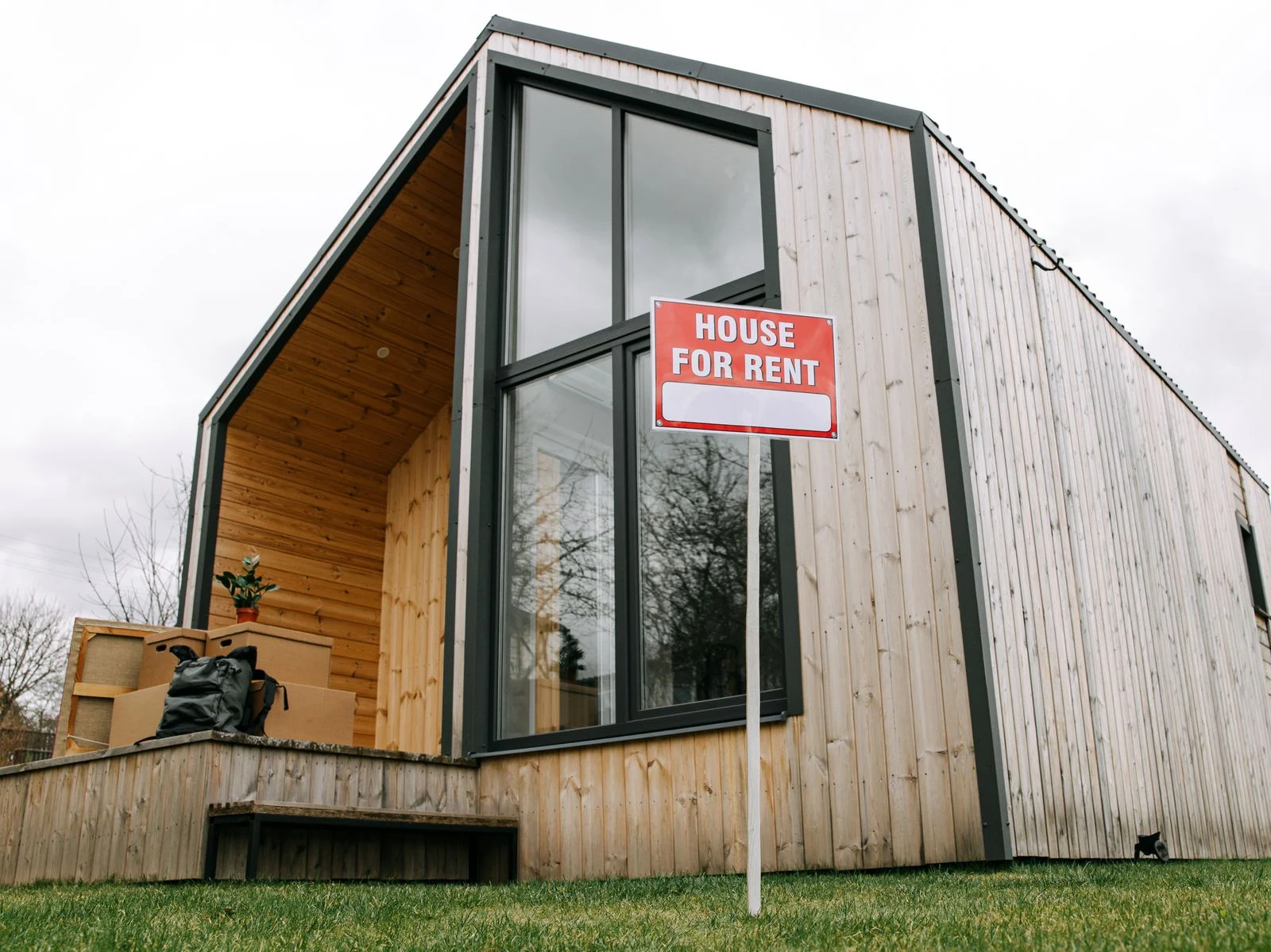
The account is in one person's name. The page may also sit under a business account somebody set up at some point, or it may not: plenty of them are run straight from a personal profile, which is the version with fewest people who can get you back in. Both can be lost, and "lost" means something very specific here.
One morning it simply does not let you in. Maybe the account holder changed phone number and the login code went with it. Maybe somebody got hold of the password. Maybe a system decided a rule had been broken. You write to support and get a form back. There is no person to phone, and that is not an oversight: support at that scale is a form, not a desk.
And if you start a new page, the followers do not come with you. Four years of audience stayed on the other side of the door. A website raises exactly the same question, but with a website you can actually answer it. Whose name your domain and hosting are in is something you can look up today and move if you need to. A domain goes into your company's name in a public registry you can check. A page only ever gets you the keys, and whoever issued them can change the lock.
Which is why this one decides the other three. If the page goes, then the same morning takes with it every bit of findability you built there, all the text an assistant could read, and the price list you finally got written down. Not one at a time. All at once.
Who is the admin on your page right now?
Now an uncomfortable question that costs ten minutes and no money at all.
Name the person who can get into your page today. Not the person who posts, but the person who can grant and remove other people's access. That list lives in the page's own settings, under page access or page roles, and the name to look for is the one carrying full control rather than the one that can only post. If you cannot name them off the top of your head, that is already the answer.
And if you can, check one more thing: whether that person still works with you. The most common failure we see is not somebody taking a page over maliciously. It is the marketing person who left on good terms three years ago, or the agency that has since closed. Nobody did anything wrong. The door is simply locked and the key is in the pocket of somebody who no longer comes here.
While that person still answers their email, the fix is one message and a couple of clicks. After that it is an entirely different story.
Does a Facebook page replace a website? The division that works
The answer is not to delete the page. If it brings you customers then it is a working thing, and working things do not get taken down.
The division of labour is simple. The page is reach and proof of life. The website is where the decision gets made and where the truth lives. A post is shown to somebody who was not looking for you. A website answers somebody who already is.
Two things make that work, and no more than two.
- One link from the page to the site, in the profile itself. Not in a post, which the feed pushes down as soon as the next one goes up, but in the place that is visible every single time.
- One place where the price, the hours and the phone number are correct. That place is the website. The page points at it rather than restating it in its own words.
The second one is where this most often comes apart. If the number lives in two places and you change one of them, two half-correct sources argue with each other in public, in front of your customer. And the customer does not conclude that one of them is out of date. They conclude that you do not know either.
The smallest website that beats no website
The word "website" sounds like a project you have to find money and three free weeks for. Which is why it gets postponed for years.
The smallest thing that genuinely works is one page. It carries five things:
- what you do, in ordinary words;
- who you do it for;
- where you do it;
- roughly what it costs;
- how to reach you.
On an address that is yours: yourfirm.ee, paid for by the year, and never the reason anybody postpones this. And with your email at that same address rather than a gmail one, because a gmail address under a quote is the first thing a customer reads as small.
It does not need a blog. It does not need a booking system, a shop, a newsletter or animation. Those can be added later if they turn out to be genuinely needed, and for most people they will not. The fourth item, the price one, is the only one anybody argues about. A range beats silence: somebody who knows nothing at all about what you charge does not write to you, they carry on looking. Our own prices start from a published figure, so you know the floor before you call, not after.
One thing this page does not solve: it does not yet make you findable for each separate service. It solves ownership and truth, a place that is yours and numbers that are right. A page per service is the next step, and it comes once the first one is standing.
If you have somebody build it for you, this is the smallest website worth buying, and it is where we tell people to start. You can grow it later. A small correct site is easier to keep in shape than a large half-finished one.
The honest limit: when the page really is enough
If you have no website and no time either, a well-kept social media page beats a website nobody updates. Not by a little. By a lot.
An abandoned website is not quiet. It publishes an old price, the name of a former employee and a phone number that no longer answers, to everybody who searches for your name. It does it every day, without fail, while your page is at least showing that you are alive. We wrote about that separately: a website nobody updates is a problem in its own right, and no new design solves it.
So the question is not really "page or website". The question is whether you have one place that belongs to you and whose contents are correct today. If that place exists, social media beside it is a good thing. If it does not, your entire business sits on somebody else's server under somebody else's rules, and you find out about it only when the rules change.
And if you only do one thing today, go and find out who the admin on your page is.
Frequently asked questions
For some businesses it genuinely can. If your work comes by word of mouth, your enquiries arrive as messages and your customers are local, then a well-kept page does the job, and does it better than an abandoned website would. Four things still go undone: a page does not find you for somebody who does not know your name, it is a poor shape for an assistant to quote from, though nobody yet knows exactly what each assistant reads, it does not hold still the things that have to stay put such as prices and opening hours, and it is not yours. The last one decides it: you are renting a shop whose walls and door belong to somebody else.
Starting costs nothing: no domain, no hosting, nobody to pay an invoice to. Posting takes a minute on a phone, which is why it actually gets done. The audience is already inside the app, so a post reaches somebody who was not looking for you, while a website waits for somebody to arrive. Messages land where people already read, which is a shorter path than a contact form. And a post from last week proves you are still trading, which is exactly where an old website loses.
Because people mostly search for the service rather than for your company name, and the only person searching for the name is the one who already knows it. A page is one page that has to stand for everything you do at once, and its content is a feed that changes daily. A website can have a separate page for each question people arrive with, and each of those gets to answer one thing properly. A website is not an automatic win here: a new site does not appear in search straight away, and becoming visible is a piece of work in its own right. And if you are a local trade, the free map listing is worth fixing before either of them. The difference is that with a website that work is possible at all.
The account is in one person's name, and the page may sit under a business account somebody set up at some point or may be attached straight to a personal profile. When access goes, one morning it simply does not let you in: a phone number may have changed and taken the second login step with it, or somebody else may have the password. You write to support and get a form back; there is no person to phone. If you start a new page, the followers do not come with you. Check in the page's own settings today who holds full control and whether that person still works with you - while they still answer, the fix is a couple of clicks.
One page is enough to own a place of your own and hold the facts straight. It has to carry five things: what you do, who you do it for, where you do it, roughly what it costs, and how to reach you. On your own domain, with an email address at that domain written on it. It needs no blog, no booking system, no shop and no newsletter; those can be added later if they turn out to be genuinely needed. The price is the only item anybody argues about, but a range beats silence: somebody who knows nothing about what you charge does not write to you, they carry on looking. Being found for each separate service is the page-per-service work that comes after this one, not something the first page does.
Read next
The question comes round every year and the answer is usually two flag icons. First it is worth knowing who the second reader is, what machine translation does to a price page, and why half a second language is worse than one.