

The question we have heard most often over the past year goes roughly like this: "we rank pretty well on Google, but is that even enough any more?"
The honest answer is: not quite. Not because Google went away, but because a share of your customers no longer opens a results page at all.
What actually changed
The old pattern went like this. Someone typed "web hosting Tallinn" into a search box, got ten blue links, opened three of them and picked one. Your job was to be among those ten, and then to be the most convincing of the three.
The new pattern is shorter. Someone asks an assistant: "who could build me a decent website and host it too, preferably in Estonia?" The answer comes back as a single paragraph. That paragraph has three names in it and one sentence about each. There are no ten blue links.
That is the whole change in one sentence: you used to compete for visibility, and now you compete for a mention. And a mention cannot be bought.
We are not saying this to frighten anyone. Most of our clients still get the bulk of their enquiries from ordinary search, and that will not change tomorrow. But someone arriving via an assistant leaves no trace your analytics can read, so you do not know how big that share is or whether it is growing. Which is exactly why that side is worth getting right before it becomes large.
AEO and SEO: the difference
AEO stands for answer engine optimization. The term is new and a little awkward, but the idea is simple.
- SEO aimed to move a person from a results page onto your site. The measure was a click.
- AEO aims to let a machine take the answer off your site and name you as the source. The measure is a mention, often with no click at all.
The most important thing to say here: these two are not opposites. We have been asked more than once whether a company should stop doing SEO and switch to AEO. It should not. A page a machine can read is almost always a page a person finds clear, and the work overlaps by roughly half. Half of the fixes we make in the name of AEO also lift ordinary search results.
The difference is emphasis. In SEO, long, elegant, atmospheric prose can work. In AEO, the short precise sentence wins, because that is the one a machine can lift and quote.
Where an assistant gets its picture of you
One honest thing up front: most of what a machine knows about you does not come from your website. It gathers pieces from your Google business listing, directories somebody entered you into years ago, reviews, social profiles, news items, and other people's pages that mention your name.
Your own site is one source among them, and the only one you fully control. That is why the work starts there.
A ten minute check: search your company name in a private window and read through the entries. Are the name, the phone number and the address the same everywhere? If your site says one number and your business listing says another, the machine has to pick one, and it does not know which is newer. The worse outcome is that it does not mention you at all.
The rest is outside your control. Your own site has a ceiling, and we come back to it.
Three things an assistant looks for on your site
1. An answer, not an advert
The sentence "we have been in business for 15 years and offer the best service" answers no question at all. It is a self-description. A machine can do nothing with it, because it carries no information anyone decides on.
A machine looks for sentences it can quote:
- What does it cost? Even "from 1500 euros" beats silence many times over.
- How long does it take?
- Who is it for, and who is it not for? The second half matters more than it sounds.
In our experience, publishing a price is the step where most companies flinch. The fear is that a competitor will see it. A competitor will see it anyway. Among our own clients, publishing a price has cut the number of enquiries and raised their quality: fewer people call, and the ones who do already know what it costs. We think that is a good trade.
2. Structure a machine can read

This is the part nobody can see on the page, and the part we usually get called in for.
A heading has to be a real heading, not text that was made big and bold. Those look identical on screen and are entirely different things in the code. The machine reads the code.
An FAQ has to be marked up so the machine can tell where the question ends and the answer begins. Your page has the question "How long does a website take?" with the answer under it. The wrong way: the question is an ordinary paragraph that was made bold, and the answer an ordinary paragraph below it. The machine sees two paragraphs, one of which happens to be bold. The right way: the question is a real heading (in the code, an h3) and the answer the paragraph directly under it.
Which one do you have? Right click on the question and choose "Inspect": an h3 on the highlighted line means you are fine, a strong means the question is only text that was made bold. Most site builders have a ready made FAQ block, and moving your questions into it is a five minute job. Ours lives on the questions and answers page.
And then there are the boring technical things, which are boring right up until they are broken: whether the page renders anything readable without JavaScript, whether every page has a stable address, whether the same content is sitting at two addresses at once.
3. Evidence of who you are
An assistant prefers a source with a visible company behind it. That is not a moral judgement, it is risk management: a machine that recommends the wrong thing gets blamed for it.
In practice this means very ordinary things. A trading name and a registry code. An address. A phone number written as text on the page rather than baked into an image. The names of real people. An author on an article.
We have seen plenty of good-looking websites where nothing states who is behind the company. To a person that reads as suspicious. To a machine it reads as absence.
The same fact, two sentences
Three sentences we see on Estonian websites every week, and the same fact rewritten. Every number below is invented for the example, not a price list.
A price
Our pricing is flexible and depends on the scope of the project. Get in touch and we will prepare a personal offer.
Not one fact in it. Rewritten:
A five page brochure site costs between 1500 and 2500 euros. That includes design and setup, and it does not include writing the text or a photo shoot. An online shop starts at 4000 euros.
Our own prices are on the site: we do not sell advice we do not follow.
A timescale
We deliver projects quickly and on schedule.
"Quickly" is not a unit of time. Rewritten:
A website is finished four to six weeks after we have the content. If the content does not exist yet, the clock starts on the day it does.
The second version also says what the deadline depends on.
A limit
Our solutions suit companies of every size.
That sentence reaches for everyone and says nothing to anyone. Rewritten:
We build brochure sites and smaller online shops with up to around 200 products. We do not build integrations with old warehouse software, and we do not build mobile apps.
Saying where you stop feels bad for sales. But the machine now has a reason to name you in one situation and not in another.
The rule we check our own pages against: take a sentence off the page and read it on its own. If it still says something alone, it is a good sentence. If it needs the page around it, a machine will not quote it, because that page is exactly what gets left behind in a quote. If writing is not your strong suit, that is work we do too.
Estonian is a small pool of text
When an assistant answers a question in English, it is drawing on an enormous body of text. Behind an Estonian question that body is far thinner. We do not know the exact numbers and we are not going to invent any, but you can check the direction yourself: ask something narrow from your own field, first in Estonian and then in English.
This cuts both ways. The good news: in Estonian it is far easier to be one of the few clear sources in your field. The bad news: the machine has fewer places to cross-check what it says about you, so one stale directory entry weighs more here than it would in a bigger language. We have watched an assistant confidently merge two Estonian companies with similar names into one.
One conclusion follows. Write the Estonian page as the original, not as a translation of the English one. Translation usually loses exactly the concrete numbers that made the page worth quoting. And call Estonian things by their Estonian names: registry code, e-invoice, VAT registration. The question your customer types contains those same words.
What we actually do when a client brings us this work
The first step is never writing. The first step is measuring, because without it people usually fix the part that was already fine.
- We measure the site. That is what our free agent-readiness audit is for. It walks the site and hands back a list of what is in order and what is not.
- We decide what each page is actually for. No single page can be expected to answer three questions at once.
- We write the answers out. Prices, timelines, limits. Usually the most uncomfortable part, and the most useful.
- We fix the structure. Headings, FAQ markup, company details, authors.
- We measure again. Same audit, same list, and now you can see what actually moved.
A short list you can walk today
- Does every service have its own page, with a price or a price range on it?
- Does each page answer one question rather than three?
- Is the FAQ on the page rather than in a separate PDF?
- Do contact details appear on every page, not only the contact page?
- Are your trading name and registry code on the site as text?
- Do articles have an author with a name?
- Is the phone number on your site the same one as in your Google business listing?
If you answered no four times, that is not bad news. It means most of the work is easy and cheap.
How to check what assistants say about you right now
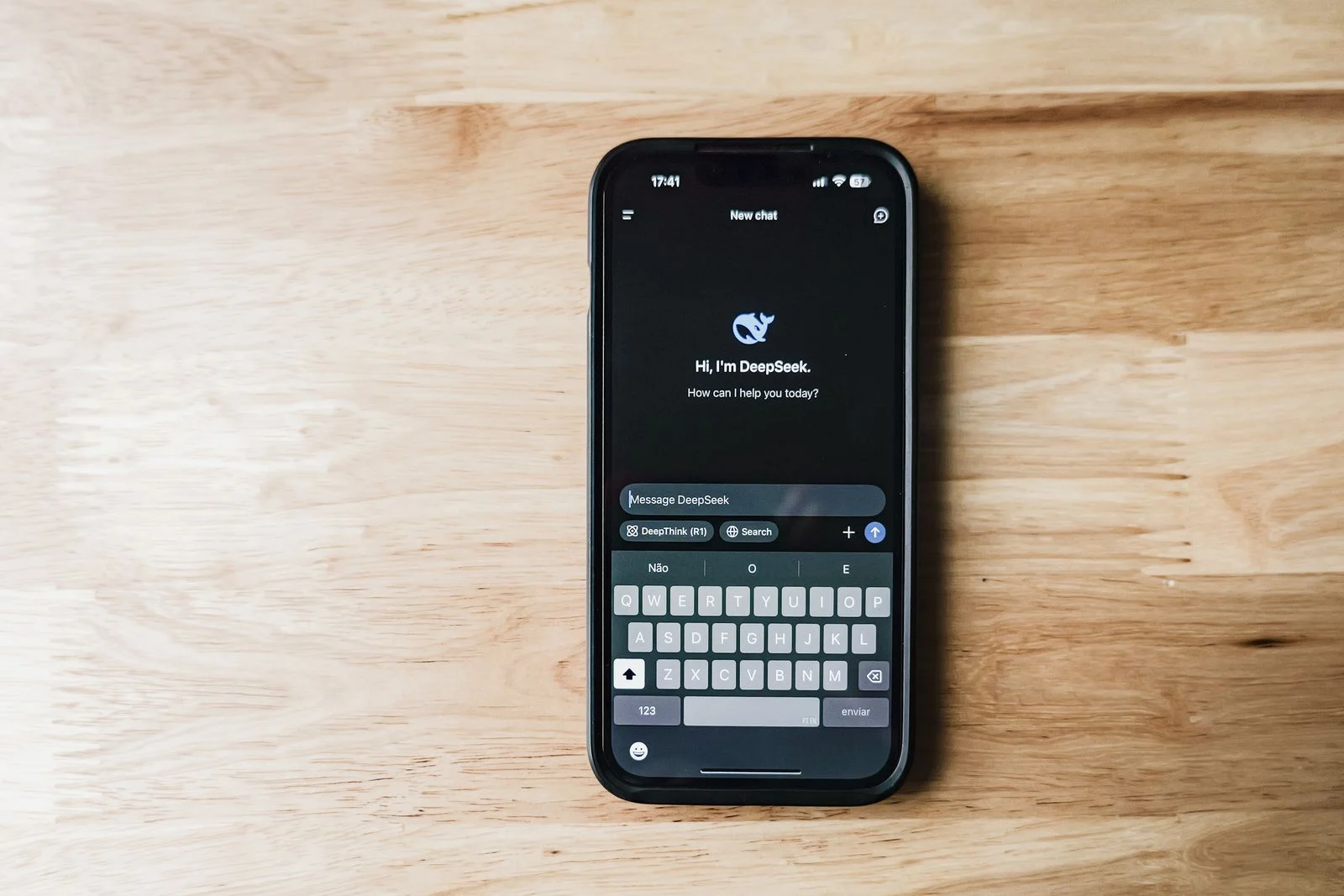
Ten minutes, no tools at all.
- Write down the question in your customer's words. Not "AEO service Tallinn", but the way a person actually types it.
- Ask it in three different assistants, in a fresh chat and signed out if you can. A signed-in chat remembers you and gives you a nicer answer than your customer gets.
- Write the answers into one file and repeat once a month: the date, the assistant, the question, the names.
Look at three things. Whether your name is there. Whether what it says is true. And if you are not there, what the other pages say that yours does not. The answer is usually boring: they have prices on the page.
And now the warning, without which this advice would do harm. The answer moves. Ask the same question twice in a row and you can get two different lists. Ask it from your phone and from a colleague's and you get two more: an assistant takes location and past conversation into account. Read it as a weather report, not a ranking.
There is no rank tracker for this, and anyone selling you one is selling weather. What can be sold honestly is a sample: the same question asked many times, counting how often your name came back. That is a sample, not a position.
What AEO is not
- A daily ranking. There is no third place: there is a mention or there is not. If somebody shows you a chart of your "AEO position", ask what that number was calculated from.
- A guaranteed mention. Anyone who guarantees one is guaranteeing something that is not theirs to give.
- A one-off purchase. The work lives in the pages, and pages age. If the page does not change, the machine's picture of you is last year's.
- A reason to stop doing SEO. Assistants take much of their material from ordinary search results. A page Google cannot find is not a page an assistant finds either. Search engine optimisation stays.
And one aimed at our own trade: putting up an llms.txt takes twenty minutes, and writing sentences worth quoting takes two days.
And now the honest part

If someone promises you that after their work ChatGPT will start recommending you, they are promising something they cannot control. We say so plainly, because that promise is circulating in this market right now.
Three things worth knowing:
- robots.txt is advisory, not law. It tells robots what they may do. Anyone who does not want to listen does not listen.
- llms.txt is young. It is a convention that tries to explain a site to machines. Some follow it, some do not. We put one up because it costs nothing, but we do not sell it as a magic wand.
- Part of the decision happens off your site. Whether anyone else talks about you, whether you appear in directories, whether anyone has reviewed you. Your own site has a ceiling here.
Your own site is the part you can genuinely control. It is doable, measurable and cheap next to what most companies spend on marketing. That is why we start there.
Where to start
The cheapest step is to measure. The agent-readiness audit is free, takes a couple of minutes, and returns a concrete list. If you would rather someone worked through that list for you, that is what our AEO service is for.
And if your site is not yet in order for ordinary search either, start there instead: the search engine audit covers that side. These two are worth doing in that order, not the other way round.
Frequently asked questions
The goal of SEO was to bring a person from a search result to your page, and the measure was a click. The goal of AEO is that a machine can take an answer off your page and name you as the source, often with no click at all. The two are not opposites: about half the work overlaps, and a page a machine can read is almost always clearer for a person too. The difference is emphasis - long atmospheric copy can work for SEO, while AEO rewards a short exact sentence a machine can lift out.
Three things. Answers rather than self-description: what it costs, how long it takes, who it suits and who it does not. Structure a machine can read: real headings in the code rather than text merely made big and bold, and questions marked up so it is clear where the question ends and the answer begins. And evidence of who you are: the company name, the registry code, an address, a phone number as text, and a named author on your articles.
It is the step most companies flinch at, and in our experience the single most useful fix. The fear is that a competitor will see - a competitor sees anyway. Among our own clients, publishing prices has cut the number of enquiries and raised their quality: fewer people call, and the ones who do already know what it costs. Even a range or a “from” figure beats silence, because “our pricing is flexible and depends on scope” carries no fact at all.
Write the question the way your customer would, not as keywords. Ask it in three different assistants, in a new conversation and signed out where you can, because a signed-in conversation remembers you and gives a nicer answer than your customer gets. Keep the answers in one file and repeat monthly. Read the result as a weather report rather than a league table: the same question asked twice can return two different lists, because an assistant takes location and earlier conversation into account.
No. Anyone who guarantees it is guaranteeing something outside their control. Most of what a machine knows about you does not come from your website but from your business listing, directories, reviews and other people’s pages - your own site has a ceiling. There is no rank tracker here either: there is no third place, only a mention or no mention. What can honestly be sold is a sample, where the same question is asked many times and you count how often your name came back.
Read next

You type your web address from memory; you have never typed your own company name into Google. Your customer does, and does it last of all, just before calling. What meets them there: your site under a heading you did not choose, the state figures, a competitor advert, an old Facebook page. Who put each row there, what you can change, and how to run that search as a stranger.